


Artificial Intelligence at Allianz: Two Use Cases
Emerj examines how Allianz deployed agentic AI to automate low-complexity claims and machine learning to flag potential fraud, both with measurable operational gains.
Originally published by Emerj on February 18, 2026.
Emerj published a detailed case study analyzing two artificial intelligence deployments at Allianz Group, one of the world's leading insurers serving approximately 125 million customers across nearly 70 countries. The analysis focuses on Project Nemo, an agentic AI system for claims automation, and Incognito, a machine learning tool for fraud detection.
Project Nemo launched in Australia in July 2025 to address operational bottlenecks during natural catastrophe events, when high-volume, low-complexity claims consume disproportionate staff attention. The system deploys seven specialized agents, including a Planner Agent, Coverage Agent, Weather Agent, Fraud Agent, Payout Agent, and Audit Agent, that independently plan and execute multi-step workflows in under five minutes. A human claims professional reviews the audit summary and makes the final payout authorization decision. For eligible food spoilage claims under $327 USD, processing time declined from several days to one day or even hours, an 80% reduction. Allianz is exploring deployment of the agent framework to travel delay claims, straightforward auto claims, and property damage assessments.
Incognito, deployed in 2023, applies supervised machine learning trained on historical claims data to identify potentially fraudulent claims for human expert review. The system does not make autonomous fraud determinations but functions as an intelligent triage mechanism. Allianz UK achieved fraud savings of £37.7 million within the first half of 2024, with overall claim fraud detection increasing by 10% over the prior year and application fraud savings increasing by 150% compared to year-to-date expectations. The article notes that Allianz detected £77.4 million in claims fraud in 2023, up from £70.7 million in 2022, reflecting both growing fraud sophistication and improved detection capability.
Read the full article at Emerj.
Originally published at Emerj.
Source
Originally published at Emerj.
Related Resources
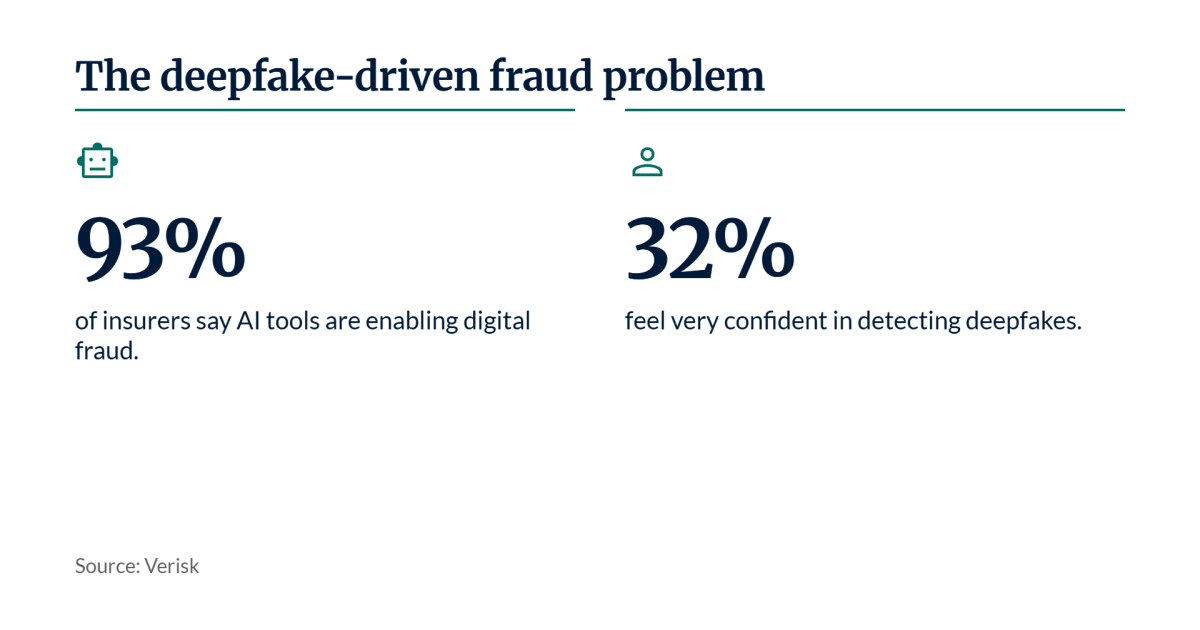
Why AI fraud tools could cause claim risks
Carpe VP of Product Tom Rasmussen explains why black-box fraud scores create operational and legal risk when claims teams need defensible evidence.

Carpe Data urges industry-wide collaboration to stem AI-driven insurance fraud
Carpe Data calls for coordinated industry response to counter increasingly sophisticated fraud tactics powered by artificial intelligence.

New and emerging risk predictions for 2026
Industry experts outline evolving risks for insurers, from third-party cyber vulnerabilities to chatbot privacy claims and distracted driving trends.
See Carpe on Your Own Book
A short conversation and a tailored walkthrough of the Carpe solutions that match your line of business.
Talk to An Expert