


The State of Claims Fraud Detection
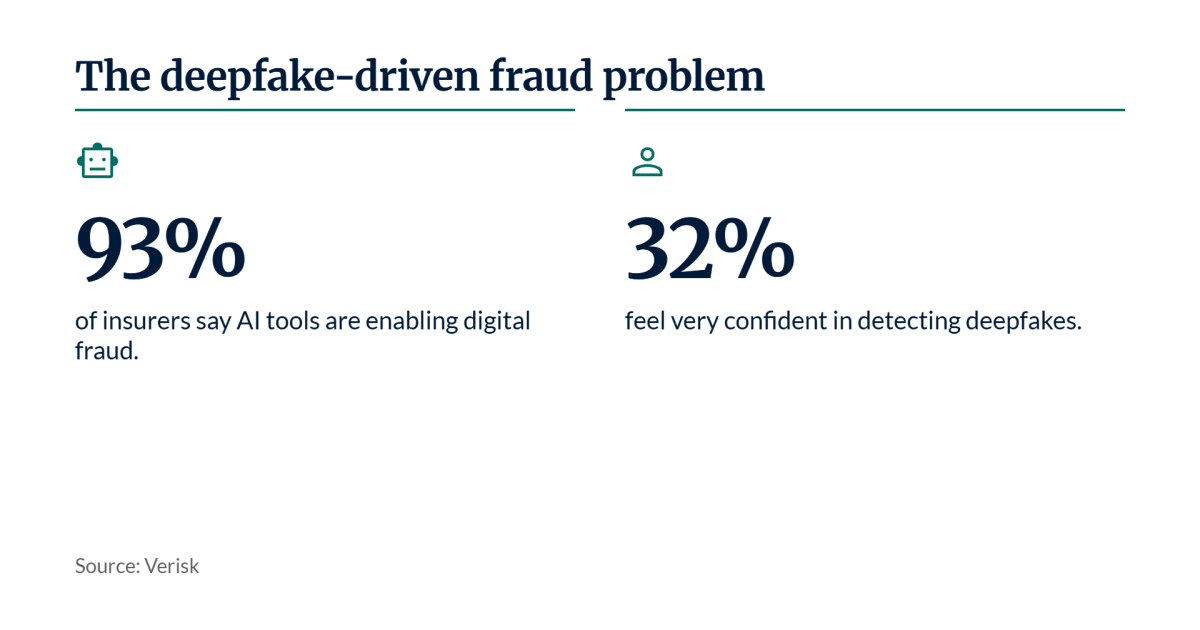
Fraudsters increasingly leverage AI to orchestrate sophisticated schemes while carriers rely on conventional detection methods, creating a widening capability gap.
Originally published by Insurance Thought Leadership on August 18, 2025.
Insurance fraud is evolving faster than detection capabilities, according to a new Online Fraud Insights report from Carpe Data. While carriers continue using traditional methods, fraudsters are exploiting AI and advanced analytics to create schemes that evade detection. The report combines quantitative data analysis with expert insights to identify trends in fraudulent behavior related to injury claims.
The analysis revealed that fraud clusters in high-population areas and tourism hotspots, with states like New York, Massachusetts, Florida, and Nevada showing elevated fraud rates. Legal environments also play a role, particularly in states with claimant-friendly frameworks or no-fault auto insurance laws. "Certain states, such as Florida, Georgia, and South Carolina, have more claimant-friendly legal frameworks, making it easier for claimants to defraud their insurance companies by navigating loopholes in the laws, " according to Tom Rasmussen, vice president of product for claims at Carpe Data. Attorney-heavy markets with aggressive advertising campaigns further inflate claims and enable fraud schemes.
The report found fraud patterns vary by generation, with Gen Z more likely to expose schemes through social media oversharing, particularly on Instagram and TikTok. Millennials showed higher rates of workplace-related fraud and LinkedIn activity, while Baby Boomers had the highest percentage of fraud discovered through Facebook. Disability claims had the highest referral rate to SIU teams at 8.9%, primarily due to claimants reporting injuries from undisclosed side businesses.
Looking ahead, Carpe Data predicts fraudsters will use AI to design more sophisticated deception tactics, requiring insurers to adopt AI-driven risk assessments and increase collaboration. The report emphasizes that regulatory changes and advanced detection strategies will be essential for carriers to stay ahead of emerging fraud schemes.
Read the full article at Insurance Thought Leadership.
Originally published at Insurance Thought Leadership.
Source
Originally published at Insurance Thought Leadership.
Related Resources
Why AI fraud tools could cause claim risks
Carpe VP of Product Tom Rasmussen explains why black-box fraud scores create operational and legal risk when claims teams need defensible evidence.

Carpe Data urges industry-wide collaboration to stem AI-driven insurance fraud
Carpe Data calls for coordinated industry response to counter increasingly sophisticated fraud tactics powered by artificial intelligence.

Artificial Intelligence at Allianz: Two Use Cases
Emerj examines how Allianz deployed agentic AI to automate low-complexity claims and machine learning to flag potential fraud, both with measurable operational gains.
See Carpe on Your Own Book
A short conversation and a tailored walkthrough of the Carpe solutions that match your line of business.
Talk to An Expert