

Carpe Litigation
Turn Litigated Claims Into Clear Next Moves
Carpe Litigation helps managers identify files that need attention and gives adjusters cited intelligence to evaluate exposure, set strategy, and prepare for negotiation.
The Claims That Need Attention Most Often Stay Hidden
A file keeps moving while facts spread across documents, systems, and people. When a complete view finally reaches a litigation leader, a deadline may be close, an evaluation may already be anchored, or opposing counsel may control what happens next.
Critical facts are scattered in different files
Demands, treatment records, testimony, correspondence, evaluations, and negotiation history live in different places. Reconstructing a file slows every decision that follows.
Big claims blend in with the rest
Inventory reports show volume. They rarely isolate files where changing exposure, missing work, or an approaching deadline calls for intervention now.
Opposing counsel came more prepared than you
Plaintiff counsel arrives with a developed narrative. Adjusters need cited facts, pressure points, and authority context to answer on their own terms.
A Representative Claim Journey
Move from Portfolio Risk to Claim Strategy
Start with a high-severity file flagged for review. Open its connected record, evaluate injury exposure from cited source material, and rehearse a negotiation before speaking with opposing counsel.
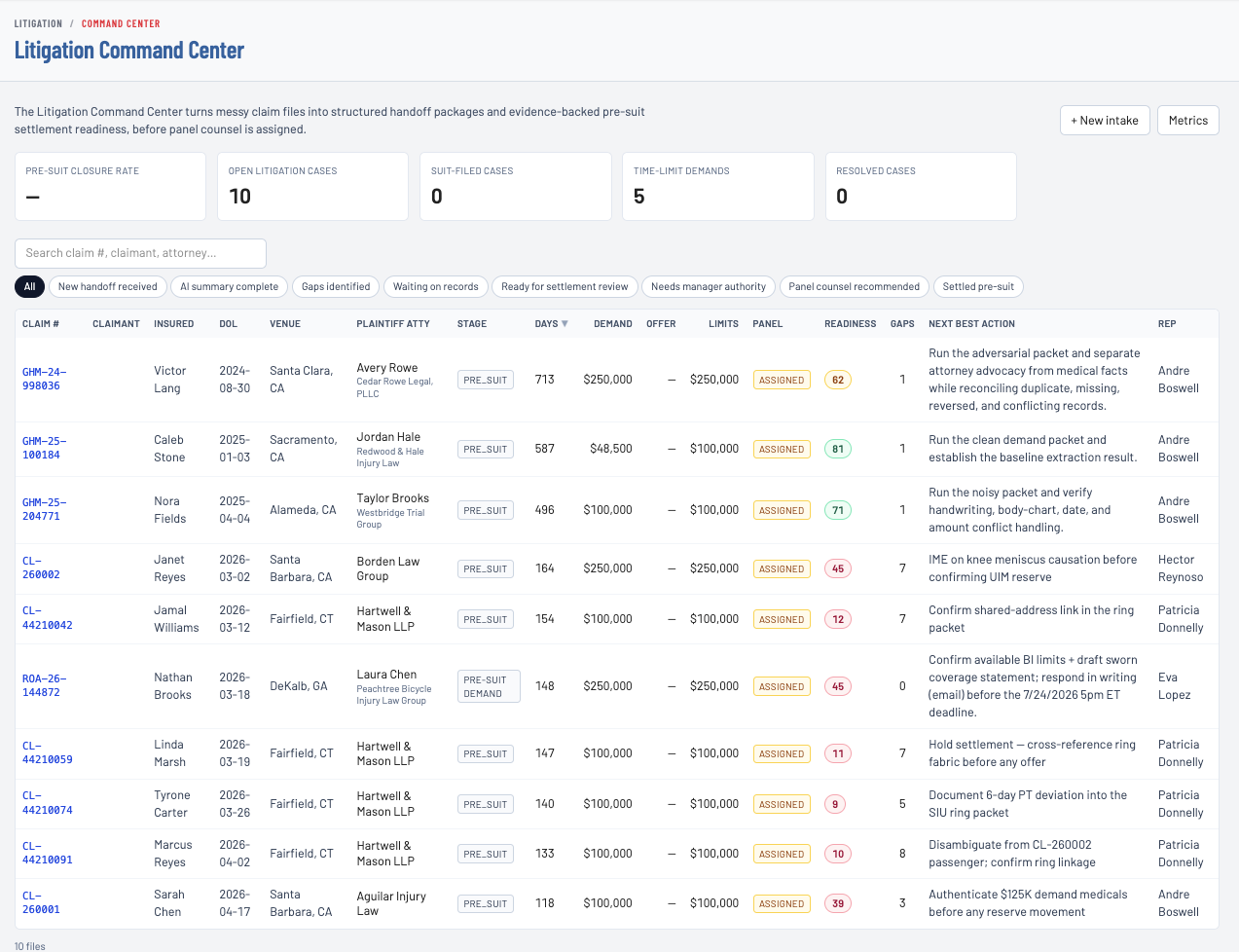
Litigation Management Command Center
A high-severity file surfaces with deadline pressure, readiness gaps, and a clear next action for management review.
Litigation Workspace
Manager and adjuster move into one working view for documents, case activity, evaluations, communications, tasks, and strategy.
Injury (BI) Evaluation Workspace
Injury allegations, treatment, bills, records, demands, and exposure come together in a consistent evaluation framework.
Negotiation (Call) Rehearsal
Adjusters practice against an AI opposing-counsel persona, pressure-test arguments, and refine their position before a live discussion.
What Better Litigation Control Changes
Give each file the attention its exposure deserves. Carpe reduces time spent assembling the record and clarifies the next move.
Intervene Earlier
Surface files where deadline pressure, exposure movement, or incomplete work calls for management attention.
Spend Less Time Rebuilding the File
Bring documents, evaluations, activity, and negotiation history into one working view before the next decision.
Enter Negotiations With a Clearer Position
Prepare from cited facts, pressure-test arguments, and align authority before speaking with opposing counsel.
Built for the People Who Move the Claim
Carpe connects portfolio oversight, claim handling, and counsel management around one current view of the litigated file.
Litigation Leaders
Prioritize attention, monitor readiness, and intervene on high-severity files while options remain open.
Litigation Reps and Adjusters
Understand the record, evaluate exposure, organize next actions, and prepare for negotiation.
Defense Counsel Managers
Align outside counsel, internal strategy, authority, and negotiation posture around the same source-backed record.
Every Recommendation Leads Back to Evidence
Carpe organizes litigation material and proposes summaries, gaps, and next actions with source support. Claim professionals review every recommendation and remain responsible for evaluation, authority, negotiation position, and trial strategy.
Trace Every Conclusion
Citations connect summaries and evaluations to demand letters, transcripts, correspondence, medical records, bills, and other source material. Carrier-supplied facts remain distinct from proposed and accepted information.
Fit Carpe Around Your Claim System
Your core claim platform remains your system of record. Carpe provides a working layer for litigated files, connecting portfolio oversight with document review, injury evaluation, strategy, and negotiation preparation.
Common Questions About Carpe Litigation
What is Carpe Litigation?+
Carpe Litigation is a claims litigation workspace for adjusters and litigation managers. It combines a portfolio command center, per-claim workspaces, prioritized diary actions, cited document intelligence, coverage, liability, exposure, negotiation, and trial preparation.
Who is Carpe Litigation built for?+
It is built for carrier litigation managers, claim adjusters handling litigated files, and internal specialists who support coverage, authority, negotiation, and trial strategy.
How does Carpe use AI in litigation work?+
Carpe uses AI to organize documents, summarize cited evidence, surface gaps and contradictions, and recommend next actions. Claim professionals review proposed information and remain responsible for decisions.
Can it analyze demand packets and depositions?+
Yes, Carpe organizes demand packet facts and financials and produces concise deposition reports with source citations, with both workflows designed for human review before information is accepted or acted on.
Does Carpe Litigation replace the core claim system?+
Carpe Litigation is designed as an operational workspace for litigated claims. It supports work around each claim and protects carrier-supplied facts by preserving source, proposed, and accepted values separately.
Walk One Litigated Claim Through Carpe
See how a portfolio signal connects to cited source material, injury evaluation, claim strategy, and negotiation preparation.